Feline Chin Acne: The Plastic Bowl Connection Most Vets Aren't Telling You About
If you've noticed little black specks on your cat's chin, redness around their mouth, or a face they keep rubbing on the carpet, there's a really good chance the root cause is sitting in your kitchen right now.
It's the bowl they're eating and drinking from.
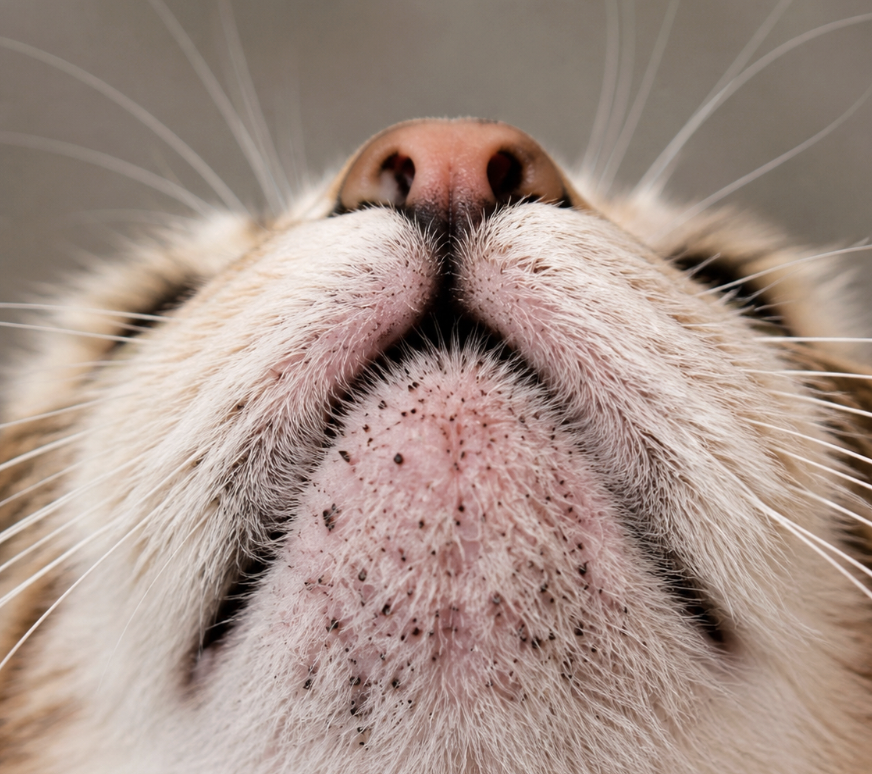
Feline chin acne is one of the most common skin issues in cats, and the cause is often hiding in plain sight.
What Feline Chin Acne Actually Looks Like
Feline chin acne shows up in stages:
Mild: small black specks on the chin (often mistaken for dirt — they're actually clogged hair follicles called comedones)
Moderate: multiple blackheads, redness, slight swelling, small raised bumps
Severe: inflammation, scabs, hair loss, visible discomfort, and your cat trying to relieve it by rubbing on furniture
Most cats I see have mild to moderate chin acne that's been dismissed as "just dirt" or "just feline acne" for months or years. If your cat is in the severe stage, please work with your vet on managing active inflammation while you address the underlying cause.
Why Plastic Bowls Are a Problem
Plastic bowls cause issues for cats in two ways:
1. Bacterial biofilm. Plastic is porous and develops microscopic scratches over time. Bacteria colonize those scratches and form a sticky layer (called biofilm) that's nearly impossible to wash off, even with hot water and soap. Every time your cat eats, their face is pressing into that bacterial layer.
2. Chemical leaching. Even "BPA-free" plastic slowly sheds chemicals like phthalates, microplastics, and BPS into food and water over time. For a small body with a fast metabolism, these low-dose exposures add up.
The chin is the body part that contacts the bowl most, and the chin's oil-rich skin is especially reactive to that combination of bacteria and chemical residue. That's why chin acne shows up there first.
The Simple Fix
Replace plastic bowls with stainless steel, glass, or ceramic. Choose shallow over deep. Wash after every meal. That's the foundation.
Most cats with mild to moderate chin acne show real improvement within 2 to 4 weeks of this single change.
When to See a Vet
Please see a veterinarian if your cat has:
Active infection (pus, scabbing, swelling)
Visible pain or sensitivity
Symptoms that aren't improving after 6 to 8 weeks
Recurrent chin acne despite good bowl hygiene
These cases may involve underlying food sensitivity, skin sensitivity, or secondary infection that needs additional support.
Want the Full Breakdown?
I went much deeper on this topic in my Substack, including:
The exact bowl materials and brands I recommend
The product I use to actively treat existing chin acne at home (non-toxic and safe)
What NOT to put on your cat's chin (some common DIY treatments are genuinely dangerous)
How this connects to other chronic skin and gut issues in cats
The deeper picture when chin acne is part of a bigger system-wide issue
Read the full post on Substack here → It’s free + if you subscribe you'll also get my future deep dives on holistic feline health delivered to your inbox!
About the author
I'm Jade, a holistic feline health coach and educator helping cat parents address the root causes of chronic illness, skin issues, and lifestyle dysregulation in their cats.
Disclaimer: I am not a veterinarian. This post is educational and reflects my experience as a holistic feline health coach. Nothing in this post is intended to diagnose, treat, cure, or prevent any disease or medical condition in cats. If your cat has chronic skin issues, eye infections, or chronic inflammation, please work alongside a holistic or integrative veterinarian on an individualized plan.
